
Template vs. Custom Framer Website: Which One Actually Fits Your Startup?

Quick answer
A Framer template is best when a startup needs a credible website quickly; a custom Framer website is better when the product, funnel, or brand needs a tailored structure. Most early teams should start with speed, then move custom once conversion precision matters.
Key takeaways
Use a template when launch speed and budget matter most.
Choose a custom build when your offer needs a unique flow.
A template can be a strong first version before a custom redesign.
Every founder building a website eventually hits the same fork in the road: pick a template and move fast, or invest in a custom build and move deliberately. Both paths can work. The question is which one actually fits where your startup is right now — not which one looks better in a comparison chart.

What a Template Gets You
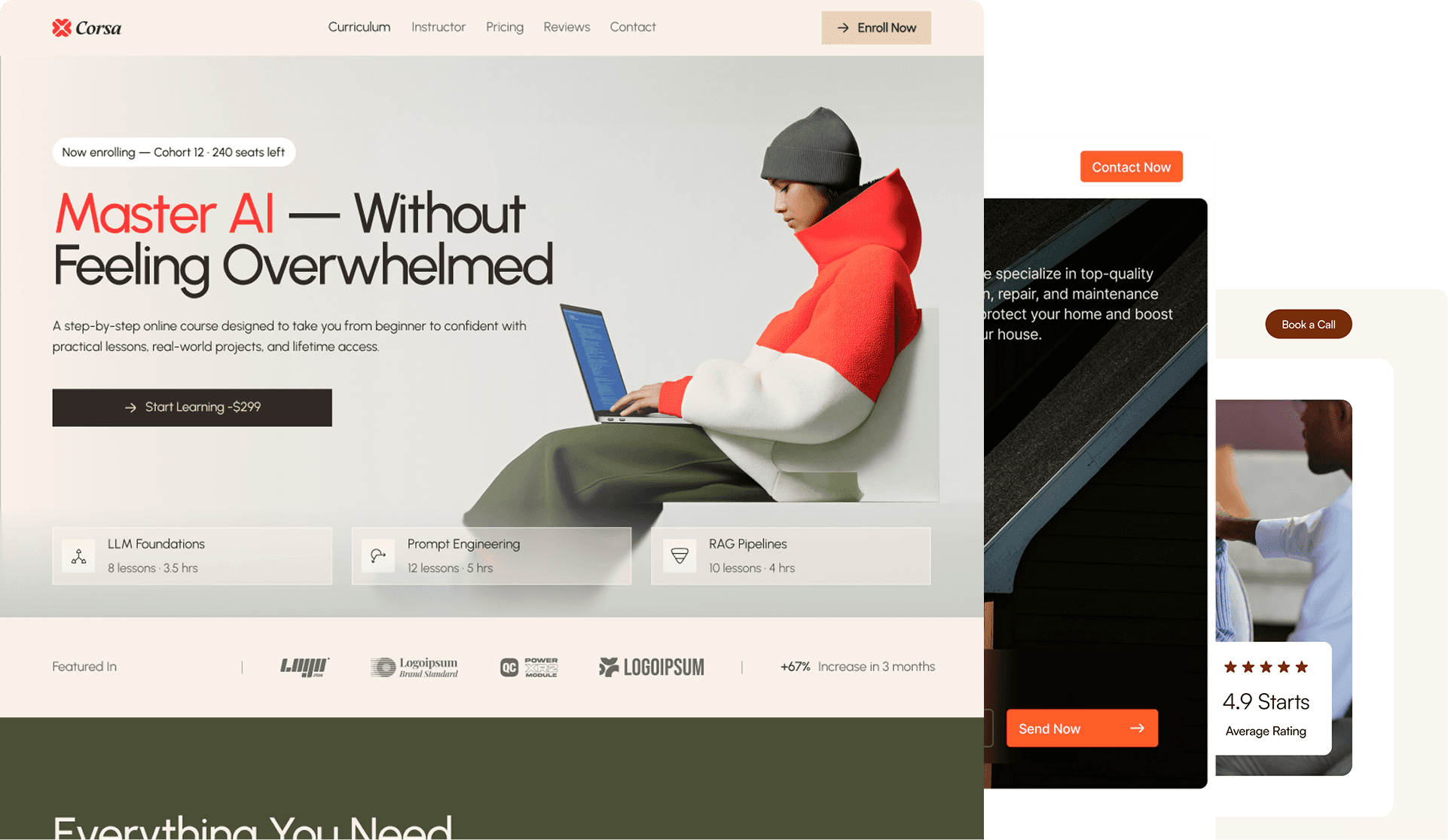
A good Framer template gives you a finished structure on day one. Hero section, feature grid, pricing table, testimonials, footer — all built, all responsive, all ready to fill with your own content. For a pre-seed startup that needs a credible web presence this week, that speed is hard to beat. You’re not paying for design decisions, you’re paying for someone else’s design decisions, already made and already tested.
The trade-off shows up later. Templates are built to be generic enough that thousands of people can use them. That means your site will share a layout DNA with everyone else who picked the same one. It also means the structure was never built around your specific user flow — it was built to look good in a marketplace preview.
What a Custom Build Gets You
A custom Framer site starts from your product, not from a template’s assumptions. That matters most when your site needs to do something a generic layout wasn’t designed for: a complex pricing structure, an unusual onboarding flow, a product that’s hard to explain in a standard three-column feature grid.
Custom work also means every animation, every interaction, and every section is built around what actually moves your specific visitors toward a signup or a call — not toward whatever the template designer assumed their average buyer wanted.
The cost is time and budget. A custom build takes longer to design and build than remixing a template, and it carries a higher price tag because you’re paying for original design work, not a license to reuse someone else’s.

The Real Question: What Stage Are You At?
If you’re validating an idea, raising a small pre-seed round, or just need something live so you stop losing credibility with a placeholder page — a template is the right call. Don’t overthink this stage. Speed wins.
If you’ve found product-market fit, you’re running paid acquisition, or your conversion funnel is starting to matter more than your launch speed, a custom build starts paying for itself. At that point, every percentage point of conversion rate is worth more than the money you’d save by reusing a template.
A lot of startups land in the middle: start with a strong template to launch fast, then move to a custom build once traffic and revenue justify the investment. That’s a completely reasonable sequence, and it’s one we help clients with often — taking a template-based MVP site and rebuilding it with custom structure once the business has proven it’s worth the investment.
What This Looks Like in Practice
At EV Studio, we build both — premium Framer templates for teams that want a fast, professional starting point, and fully custom Framer builds for startups and SaaS companies that need their site engineered around a specific funnel. If you’re not sure which stage you’re at, that’s a fair question to bring to a quick call rather than guess on your own.
The honest answer is that neither option is universally “better.” A template is the right tool when speed matters most. A custom build is the right tool when precision matters most. Knowing which one your startup needs right now is most of the decision.
Need a new website or Template customization?
Share some info about your website or business and we will get back to you within one hour or less.

Book Intro Call
This quick call is a chance for us to learn more about your goals, answer any questions, and see how we can best support your project.
Istaiq Ahmed